

What is an overdose?
An overdose, or an “OD”, happens when your body has taken a dangerous amount of a substance or a combination of substances. Overdoses can be caused by different types of drugs and can lead to death. There are steps you can take to prevent an overdose.
STAY AWARE AND SAVE A LIFE!
The data
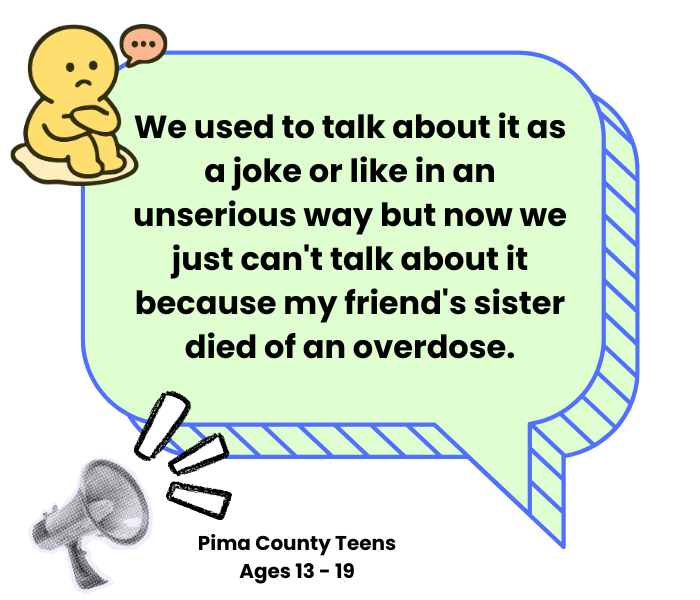
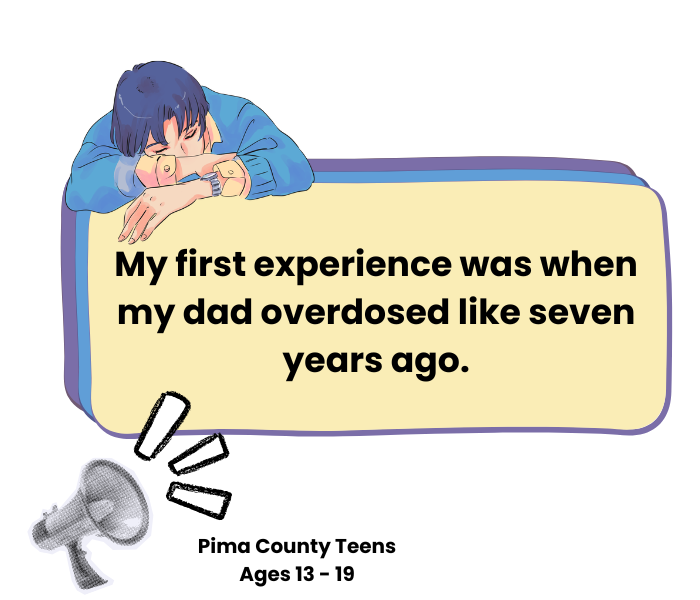
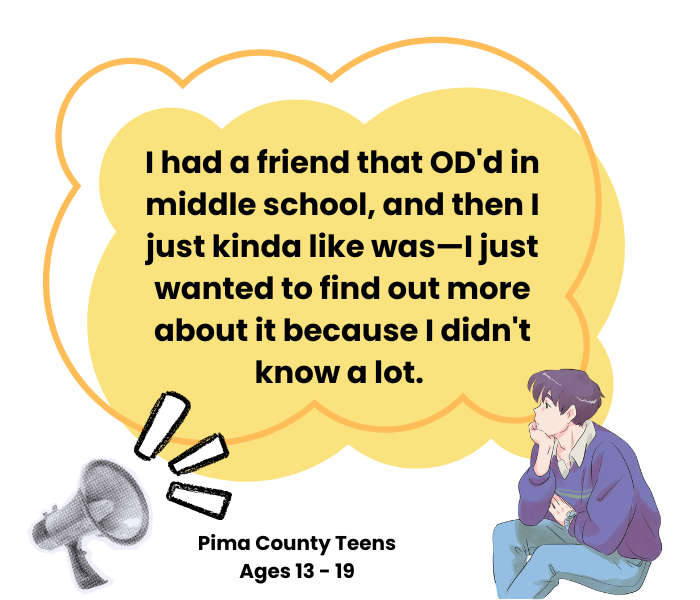
In the past 10 years, overdoses have increased dramatically both in Pima County and nationally. In Pima County, the top two drugs that are involved in overdose deaths are methamphetamines and fentanyl. Learn more about these drugs on the Drug & Alcohol page.
Click the picture for a zoomed in view of the graph.

Opioid Overdose
An opioid overdose happens when too many opioids are messing with your brain’s ability to breathe. It can cause someone to stop breathing and go into respiratory failure. It can be fatal without immediate medical attention or Narcan (naloxone).
Signs of an opioid overdose
- Unresponsive (can't wake up)
- Breathing is slow or has stopped
- Snoring or gurgling sounds from the mouth
- Cold and clammy skin
- Discoloration of lips and nails (blue color)
- Extremely small pupils (pinpoint eyes)
Narcan (naloxone)
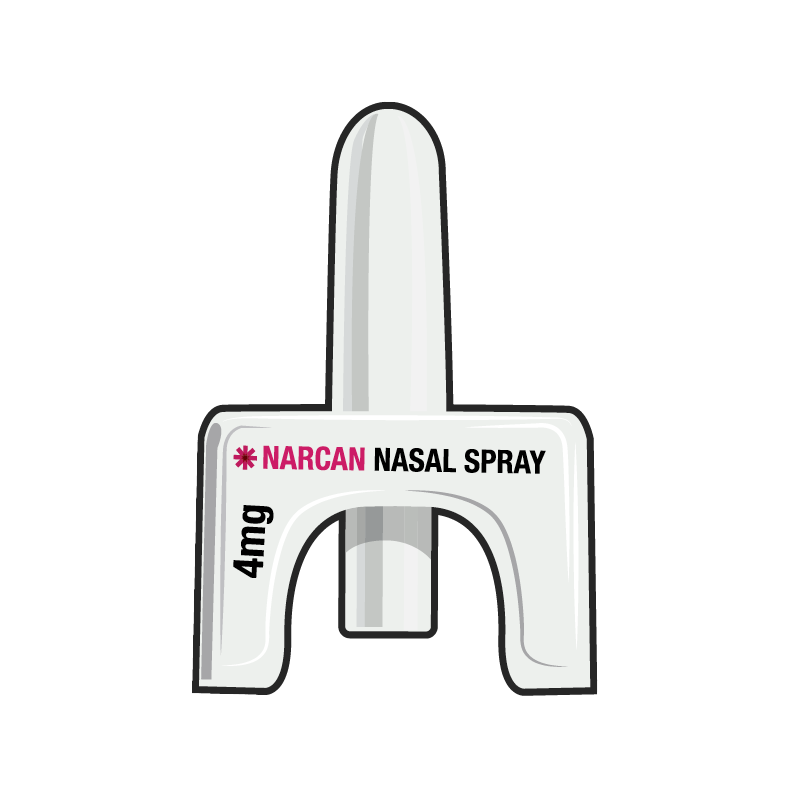
Naloxone is the medication that can reverse an opioid overdose. An opioid includes drugs like fentanyl, heroin, oxycodone, Vicodin, etc. It can help someone's breathing return if they are overdosing from an opioid. One device is one dose.
Steps to respond to an Opioid OD
- Identify the signs of an overdose, try to wake them up. If they do not respond, they might be overdosing.
- Call 911
- If you have Narcan, remove device from packaging and place the tip fully into the nostril. (Do not "test" the spary beforehand)
- Firmly press the button on the Narcan.
- Check breathing. If they are not breathing, provide CPR, rescue breathes, or chest compressions.
- If they are breathing, move the person to their left side in the recovery position.
- If the person does not respond in 2 minutes, repeat steps and give a second dose. Repeat process, if person still does not respond or start breathing.
Note: Once Narcan is given, the person may not be fully awake. Make sure to check for breathing.
facts about naloxone
- Naloxone only works on opioids, but it will not hurt someone if there is no opioids in their body. Always administer naloxone if you suspect any sort of overdose as fentanyl (a deadly opioid) is often found in a lot of street drugs.
- Stronger opioids, like fentanyl, will likely require more than one dose. You cannot give someone too much naloxone, but it is recommended to wait 2 minutes between the doses.
- Naloxone will only last for 30 - 90 minutes. It is important to call 911 for emergency medical services to respond to the situation.
- Narcan and naloxone are the same thing. Narcan is the brand name, while naloxone is the generic name.
Stimulant Overdose (Meth, amphetamines, etc.)
Many people believe that you cannot overdose on stimulants, like meth or amphetamines. A stimulant overdose is possible, but it does look different from overdosing on opioids. When too much of a stimulant is taken, it can increase heart rate and body temperature, which can impact people different, but may lead to deadly conditions, such as a heart attack, seizure, or overheating.
Signs of a stimulant overdose
Physical symptoms
- Overheating (body temperature over 104°F)
- Fast, racing heart
- Intense sweating
- Chest pain or tightness
- Jerking movements or stiffness
- Irregular breathing
Mental symptoms
- Paranoia
- Restlessness
- Intense panic
- Hallucinations (seeing or hearing things that are not there)
- Delusions (believing in things that are not true or out of the ordinary)
- Irritability or increased aggressiveness
how to respond to a stimulant overdose
Some signs are life threatening, call 911 immediately if you see the following symptoms. Naloxone should also be administered because fentanyl is commonly found in street drugs.
- Body temperature is over 104°F
- Heart attack (crushing chest pain, intense sweating)
- Stroke (Numbness or inability to move parts of body, facial droop)
- Seizure (shaking or twitching uncontrollably, rapid blinking, loss of ability to move)
- Danger to self or others
- Opioid Overdose
If signs are not life-threatening, additional support can be provided especially if someone took too much of the drug.
- Cool down: Ice packs or a cool towel under armpit or knees
- Hydration: Drink water or sports drink, avoid coffee or caffeine
- Calm environment: speak gently, remain calm, and move to a quiet setting to rest
- Get rest, shower, sleep, eat food, and/or do breathing exercises
I'm scared of messing up or being in trouble
It’s okay to be scared. It’s always scary when someone is overdosing. Here are things to be aware of so you are more prepared if it does happen.
Good Samaritan Law
If you are worried about being in trouble with law enforcement, just know that you are covered by Arizona’s Good Samaritan Laws (A.R.S. § 32-1471 & A.R.S. § 13-3423). If you try to help someone in emergency, you won’t get in trouble, even if you were using drugs with them.
Arizona law says you cannot be arrested or charged for:
- having small amounts of drugs on you,
- using drugs,
- or having drug paraphernalia (pipes/needles/etc.)
The Good Samaritan law protects the helper and the person who is experiencing an overdose.
This law was created because they noticed that people did not want to call 911 because they were scared of getting in trouble. Don’t let fear of the police prevent you from saving your friend. You have the law on your side.
Providing CPR
CPR can help save a life when the heart stop beating. Even if you have taken a training, it still may be difficult to remember the steps. When you call 911, the 911 operator can help walk you through the steps and give you detailed instructions.
- If the person does not respond and is not breathing or only gasping, CALL 9-1-1 and get equipment, or tell someone to do so
- Kneel beside the person. Place the person on their back on a firm, flat surface
- The American Red Cross CPR guidelines recommend 100 to 120 chest compressions per minute, 30 at a time. Remember these five points:
- 1. Hand position: Two hands centered on the chest
- 2. Body position: shoulders directly over hands; elbows locked
- 3. Compression depth: at least 2 inches
- 4. Rate of compressions: 100 to 120 per minute
- 5. Allow chest to return to normal position after each compression
- Give 2 breaths:
- 1. Open the airway to a past-neutral position using the head-tilt/chin-lift technique
- 2. Pinch the nose shut, take a normal breath, and make complete seal over the person’s mouth with your mouth.
- 3. Ensure each breath lasts about 1 second and makes the chest rise; allow air to exit before giving the next breath
- Note: If the 1st breath does not cause the chest to rise, retilt the head and ensure a proper seal before giving the 2nd breath If the 2nd breath does not make the chest rise, an object may be blocking the airway
- Continue giving sets of 30 chest compressions and 2 breaths. Use an AED as soon as one is available! Minimize interruptions to chest compressions to less than 10 seconds.
Check out the video for CPR songs through the decades. The beats to these songs are all between 100 to 120 beats per minute, which is the recommended number of compressions per minute, based on the CPR guidelines from the American Red Cross.
Click here to learn more about first aid and CPR from the American Red Cross.
Pima County Partners





Funding Disclaimer:
Funding for this campaign was made possible (in part) by the Centers for Disease Control and Prevention through the Overdose Data to Action: Limiting Overdose through Collaborative Actions in Localities (OD2A:LOCAL) grant. The views expressed in materials, publications, or by partners, do not necessarily reflect the official policies of the Department of Health and Human Services, nor does the mention of trade names, commercial practices, or organizations imply endorsement by the U.S. Government.