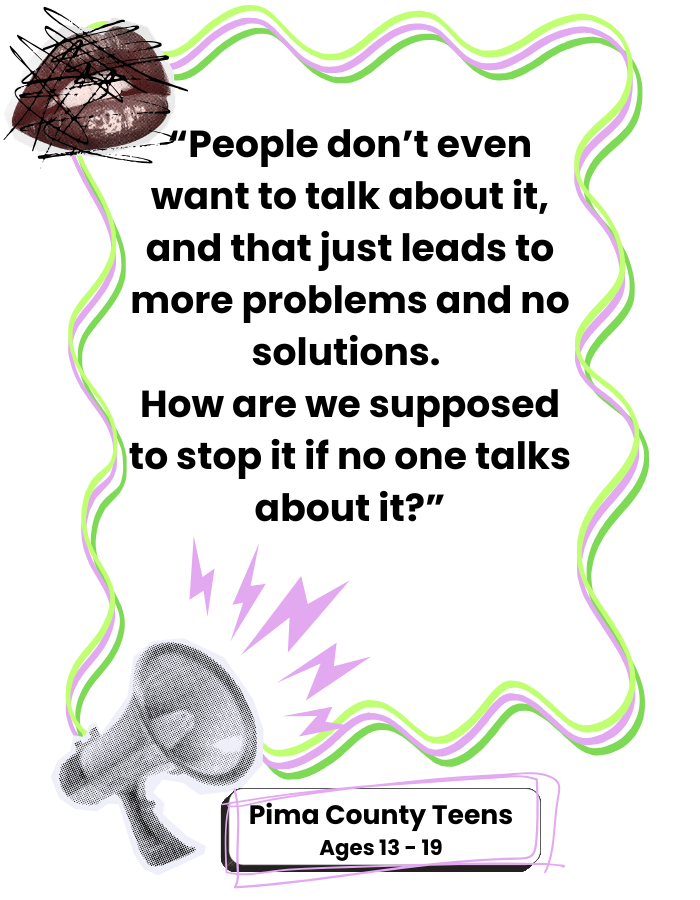
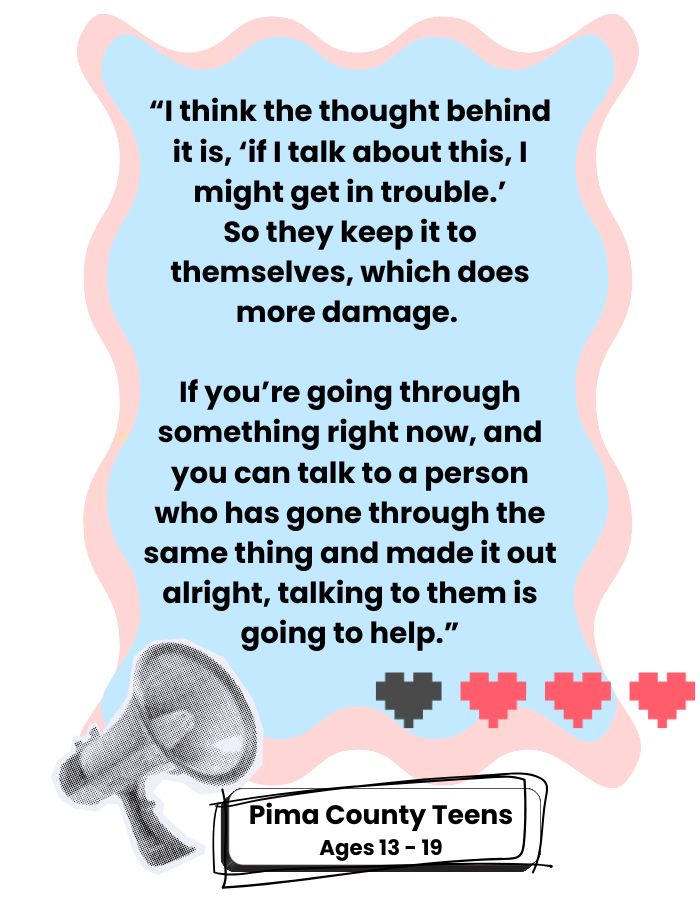
It’s not always easy to talk about drugs, overdoses, and mental health. Sometimes it feels awkward, scary, or too personal. But we know that not talking about it doesn’t help. How do we know? Because you told us!
If we start the conversation now, openly and without judgment, it could make it easier for others to do the same in the future.
That’s the goal behind “Let’s Talk About It” – To have a place to learn more and end stigma and to empower you!
Words are powerful! What we say and how we say it matters. So, before we start the conversation, here are some key words to know:
Recovery: Recovery is defined as “a return to a normal state of health, mind, or strength” to live their best life. It is used when talking about physical conditions, mental illness, substance use, and more. We will be using “recovery” to discuss mental health and substance use.
Stigma: Stigma is a negative and unfair belief that someone has about a person or group of people based on a specific part of them or their life.
Person-first language: Person-first language is exactly how it sounds – it places the person before the condition or situation. It’s about respect and using more neutral de-stigmatizing language. Because we’re not our circumstances, that’s just a part of who we are as a whole person. For example:
Instead of saying “She’s an addict” you could say “She has an addiction”
Instead of saying “He’s a junkie” you could say “He uses drugs”
Instead of saying “He’s bi-polar” you could say “He has bi-polar disorder”
Instead of saying “She committed suicide” you could say “She died by suicide”
Whether someone told you they think you need help with a possible addiction or mental health issue, or you’ve decided you’d like help, it is your decision whether or not to get it. If you’re ready, there are people who care and are ready to support you. It might be scary at first, but it’s worth it – YOU are worth it. Click here to find resources to get help!
How can I help a friend?
Just like it’s your decision to get help if you want it, it’s their decision whether or not they think they want, need, or are ready to get help. If you’re worried about a friend, it’s ok to tell them in a kind and non-judgmental way. You can show them you care by listening to what they’re feeling and what they want, and sharing the resources. It’s also important to learn about how stigma can make it worse for someone who is using drugs. Click here to learn more about stigma and ways you can support a friend.
Over 84% of people around the world use Google at least three times a day. How do we know? Well, we asked Google. But how can we really know if that’s true? The answer is we can’t. But there are ways to search smarter when you’re looking for solid information. Incorrect search results can lead to dangerous life results. Here’s some tips to help:
Check the last three letters of the web address. Chances are if it ends in .gov, .org, or .edu, it’s way more trustworthy than any .com, or .net.
Funding for this campaign was made possible (in part) by the Centers for Disease Control and Prevention through the Overdose Data to Action: Limiting Overdose through Collaborative Actions in Localities (OD2A:LOCAL) grant. The views expressed in materials, publications, or by partners, do not necessarily reflect the official policies of the Department of Health and Human Services, nor does the mention of trade names, commercial practices, or organizations imply endorsement by the U.S. Government.

![Quote from a Pima County Teen: "It feels like such a taboo topic that if you even talk about it, it's as bad as [using drugs]"](https://pimahelpline.org/wp-content/uploads/2026/05/Taboo-Topic.png)