

What is stigma?
Stigma happens when people are seen negatively and treated badly because they have something about them that society disapproves of, like people who use drugs or have a mental illness.
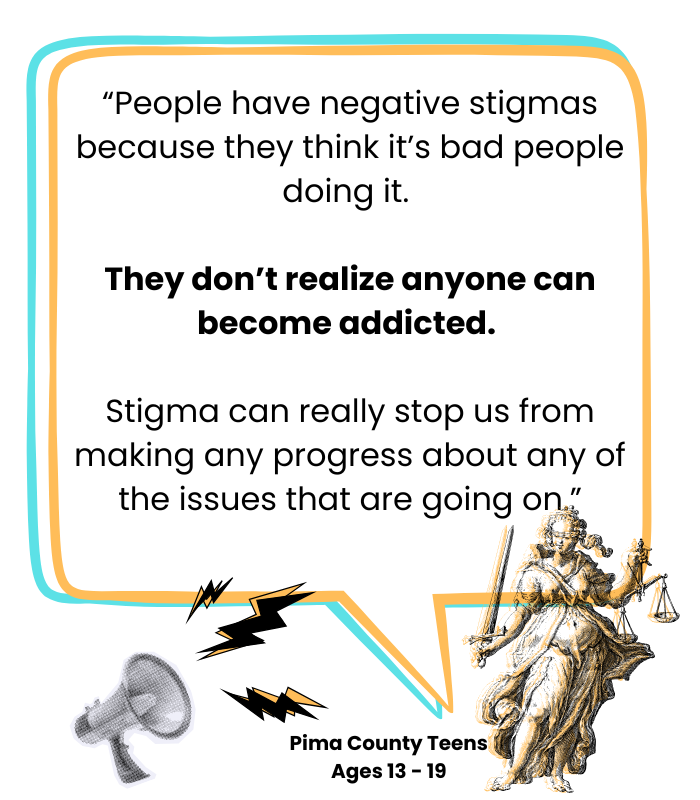
Chances are you’ve come across stigma at least once in your life. Most people have, even if they don’t realize it. Maybe you’ve even been stigmatized yourself. Has anyone ever judged or labeled you based on how you look, where you’re from, or something they just assumed about you? How did it feel? Embarrassing, lonely, like you don’t fit in or have to hide a part of who you are? Yea, stigma can do that.
When talking about substance use, mental health, and recovery, emotions like shame and judgment often come up. These can feel overwhelming, especially for someone who is already struggling and needs support. Stigma causes a lot of people to stay silent and suffer alone.
No one is born knowing or believing stigma – it’s something we learn from what we see, hear, and experience. What is normalized in the world around us becomes our reality and affects the way we see others and ourselves. While we may not control what we’ve been taught, we can choose what we do next.
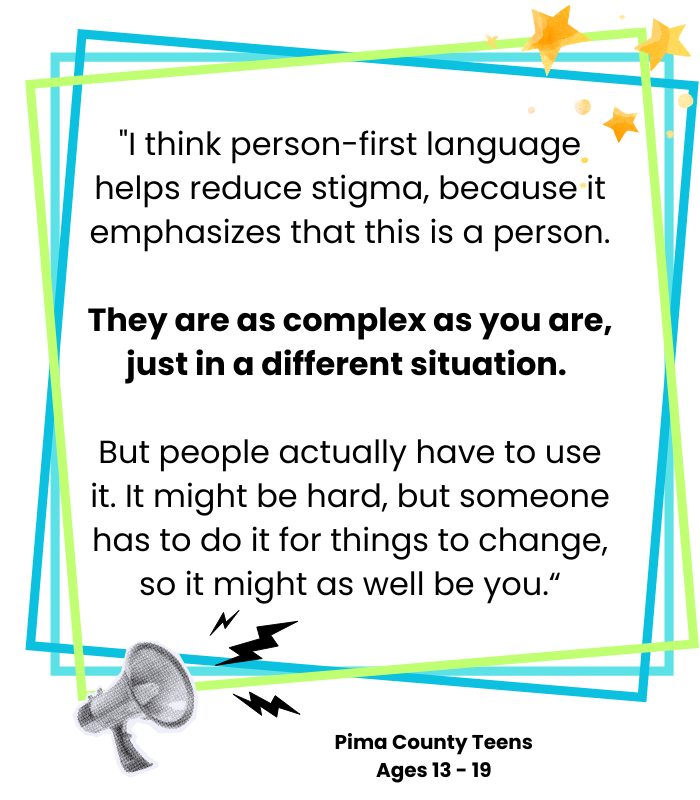
Once we understand what stigma is and the impact it has, we can start making a difference by talking with friends and family, asking questions, and continuing to learn. When having these conversations, how we use our words can either hurt or help. Using person-first language is one way to show respect, build empathy, and challenge the misconceptions that make it hard to “talk about it.”
Person-FIrst Language
Person-first Language removes stigmatizing labels or terms and places the person before their condition or life events. It encourages supportive ways of speaking and recognizes that people are much more than a diagnosis, decision, or moment in their life. Removing bias and blame makes room for kindness and understanding. Choosing person-first language gives reassurance that people care and there is hope for recovery.

Supportive Person-First Language Examples
The person comes first and their identity is not defined by their condition or life events. It provides more neutral language to describe the person's experience.
- Casey has an addiction.
- Jordan uses drugs and alcohol.
- Taylor is in recovery. They did have a setback.
- There are people who use drugs at the bus stop.
Stigmatizing Language Examples
The language is negative and reduces a person. It limits a person and their identity becomes defined by the stigma. Also includes negative stereotypes that harm the other person.
- Casey is an addict.
- Jordan abuses drugs and alcohol.
- Taylor was clean, but they relapsed.
- There are crackheads and zombies at the bus stop.
Because person-first language is all about the individual, it’s also good to know how they identify themselves. It’s ok to ask them if you don’t know, rather than assume.
Some people feel empowered by using terms like “addict in recovery”, or saying “I’m an alcoholic,” especially in support group spaces. For some, using these terms can make them feel less alone and understood by those going through similar situations. The key difference is the person is choosing the label for themselves rather than having it imposed in a judgmental way!
My friend opened up to me... what do i say?
If you feel unprepared to have a serious conversation with a friend, or if you worry about saying the wrong thing when talking about mental health, know you are heard. Talking about mental health can be difficult and even a little awkward. You can, however, easily prepare for when the time comes and you have become a Certified Great Listener ®. Keep reading to learn how to have conversations that will allow space for reflection and meaningful responses. In addition to PFL (Person-First Language) you’ll learn about open-ended vs closed-ended questions, active listening, and what to avoid when having a conversation. This are your tools to become a great listener, practice them and keep them in your toolbox.
Your toolbox for deep conversations
Start by making sure that you are in a good place yourself.
- Do you have enough time to talk?
- Do you have the energy and attention span to have a heavy conversation?
If not, you can suggest meeting them at another time where you can provide undivided attention. On the other hand, make sure your friend is good with starting the conversation. Then, make sure that they are comfortable in the space you’re currently at or if you’d want to move to another place that offers privacy, safety, and comfortability. Make sure privacy is ensured by avoiding talking about private topics around many people or sharing with others what they shared with you (do not post on your Close Friends!). Finally, avoid distractions (your phone, computer, loud noise or environments).
Give your complete focus on the speaker, including their body language and tone, to fully understand and remember what’s being said.
What does active listening look like?
Summarizing what was said to check for understanding.
- “So, what you’re saying is…”
- “Can you tell me more about…“
- “When you said ___, what do you mean by that?”
Being mindful of body language because non-verbal communication can say the quiet part out loud. For example, have you asked someone before how they’re doing and they answer, “I’m fine”, but you can tell something is not okay just by how they are acting?
Notice their posture, if they’re hunched over, have their arms/legs crossed, is their posture relaxed, or is their jaw clenched. You can also let the person know you are following them by nodding during the conversation, making eye contact, or by subtly adopting their posture or gestures (aka mirroring).
When listening to someone, we’re actively thinking about what to say next or forming opinions about what they’re experiencing. The purpose of active listening is to bring empathy and reduce assumptions, leaving only space for understanding.
These usually start with how, why, what, or “tell me about…” and are the opposite of closed-ended (yes/no) questions, allowing for longer and more thoughtful responses. You can already see how some open-ended statements were used for active listening! Read further for more examples:
- What are you feeling right now?
- What do you think is causing these feelings?
- How would you like things to be different?
- What has helped you feel better in the past?
When someone is struggling with substance use or mental health challenges, the way we respond can make a big difference. Empathizing means trying to understand how someone else might feel and supporting them without judgment. It can sound like saying, “I’m here for you” or “That must be really hard.” Sympathizing, on the other hand, means feeling sorry for someone and recognizing that they’re going through a difficult time. When talking about difficult experiences, empathy can help people feel more comfortable opening up because they feel understood.
Pima County Partners










Funding Disclaimer:
Funding for this campaign was made possible (in part) by the Centers for Disease Control and Prevention through the Overdose Data to Action: Limiting Overdose through Collaborative Actions in Localities (OD2A:LOCAL) grant. The views expressed in materials, publications, or by partners, do not necessarily reflect the official policies of the Department of Health and Human Services, nor does the mention of trade names, commercial practices, or organizations imply endorsement by the U.S. Government.